
History · The Revolution next door
A raid by whaleboat, just up the road.
In 1781, American soldiers crossed Long Island Sound in the dark and captured the British fort at Fort Salonga. Here is that story, and the colonial farm country around it.
The Revolution next door
War comes to the North Shore.


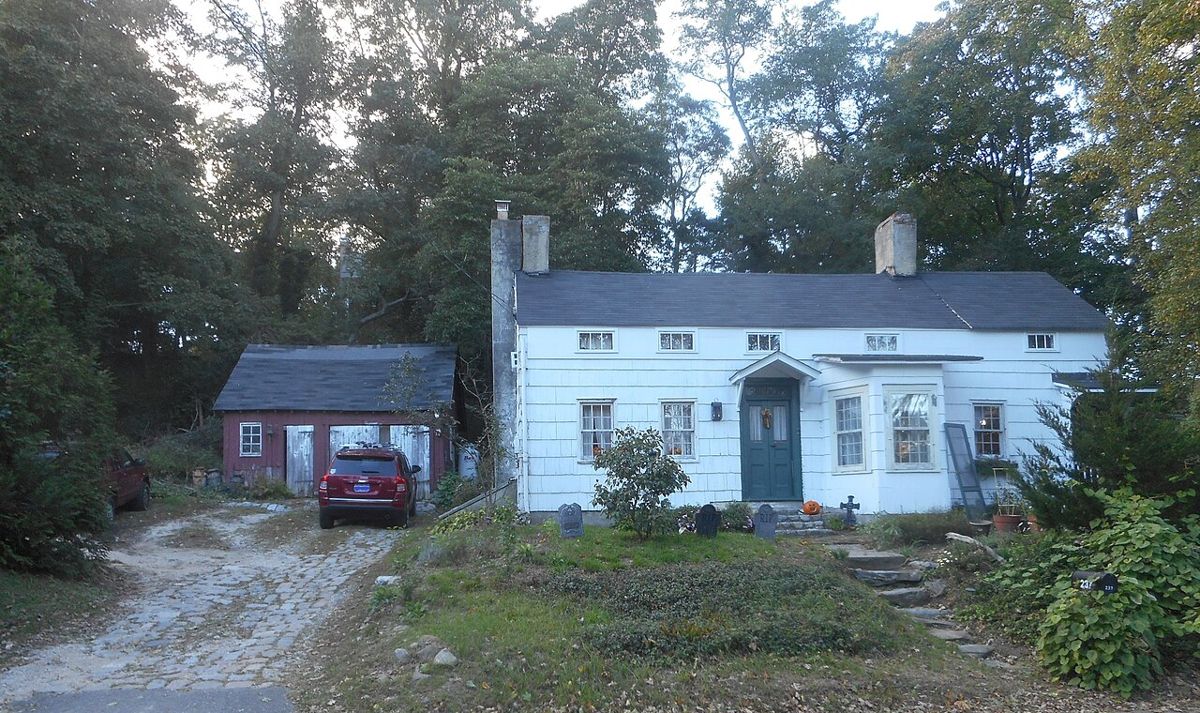
A farmhouse on Middleville Road
The B. Ketchum House, built around 1765 at 237 Middleville Road, still stands on the same road as the Meadowlark trailhead. It's on the National Register of Historic Places as a reminder of Huntington's early farm settlement.
Huntington declares for liberty
On July 22, the Declaration of Independence is read on Huntington's village green. Residents cut the Union and the king's initials out of their flag, leaving a red banner marked "Liberty," then stuff the scraps into a gunpowder-filled effigy of George III and burn it.
Occupation
After the American defeat at the Battle of Long Island, British troops arrive in Huntington on September 1 and stay until the war ends. That same month Nathan Hale lands at Huntington on his spying mission. Halesite is named for him.
The raid on Fort Slongo
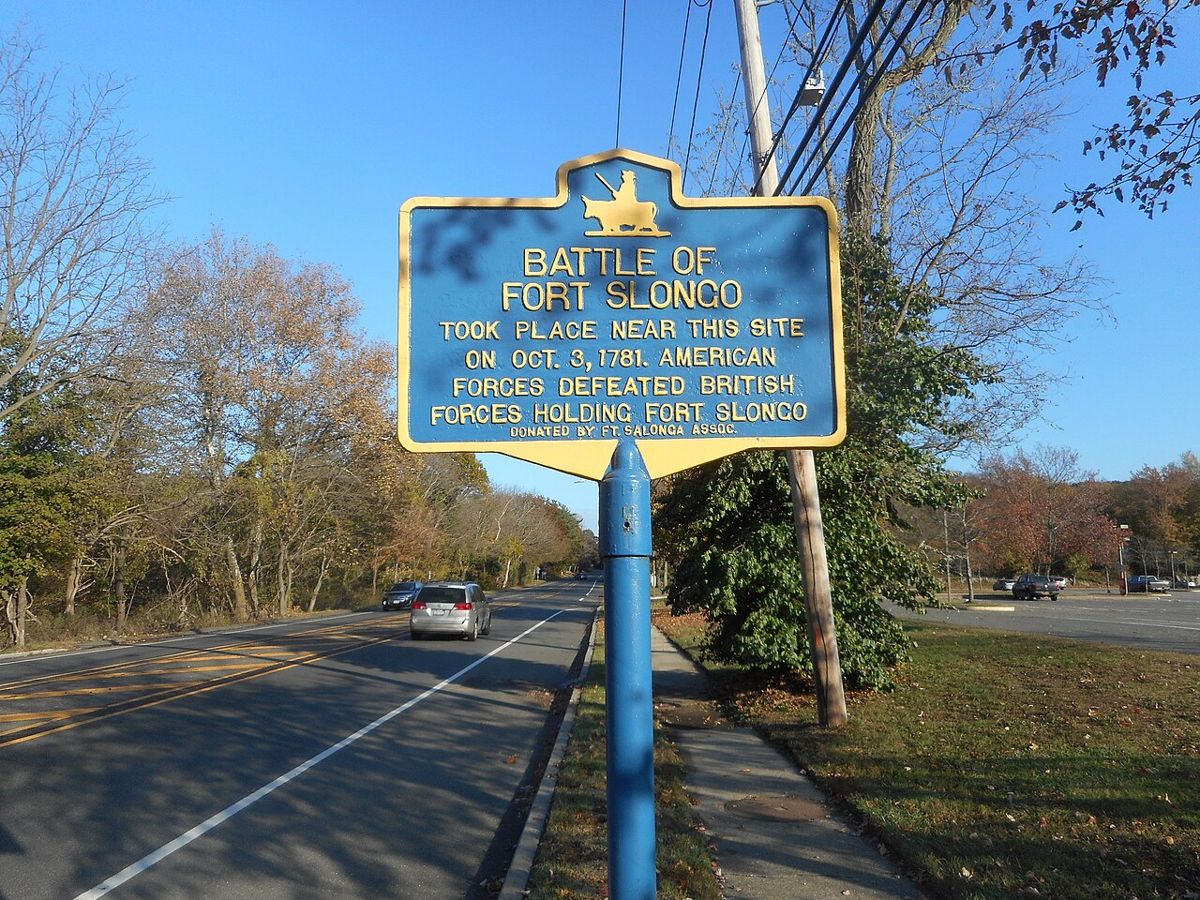
The British and Loyalists keep a small earthen fort at Fort Salonga. Before dawn on October 3, about 100 American soldiers cross from the Connecticut shore in whaleboats. The raid was planned by Major Benjamin Tallmadge, who also ran Washington's Culper spy ring, and led by Major Lemuel Trescott.
They take the fort, capture 21 prisoners and a brass cannon, and burn the fort and its stores. No Americans are killed. Sergeant Elijah Churchill is wounded and later becomes one of only three soldiers to receive the Badge of Military Merit, the forerunner of the Purple Heart.
Fort Golgotha
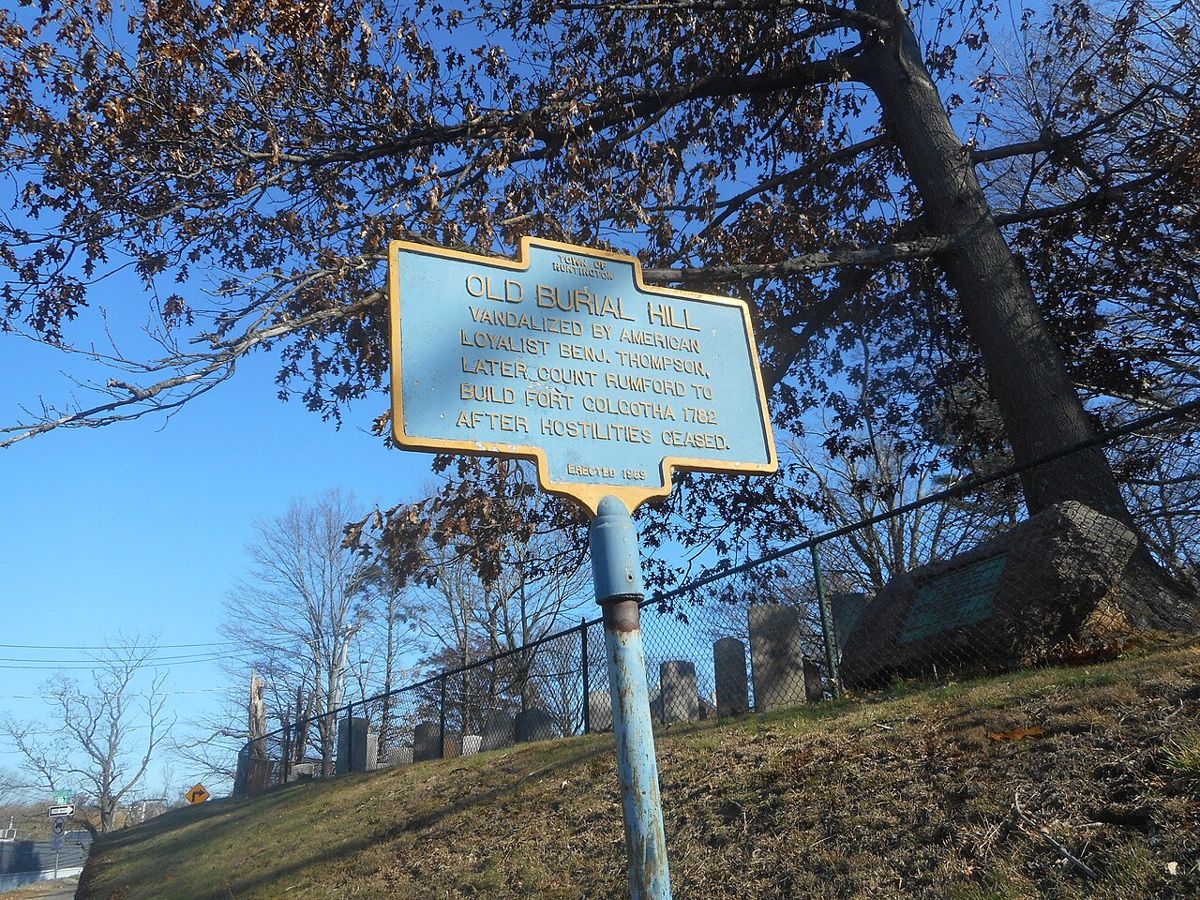
In Huntington village, Loyalist Colonel Benjamin Thompson builds a fort on Old Burial Hill, using gravestones and timber from the church his troops tore down.
Farms, harbors and the railroad
The land around Middleville stays farmland through the 1800s. The railroad reaches Northport in 1868 and moves its station to Larkfield (East Northport) in 1873, and Great Cow Harbor incorporates as the Village of Northport in 1894. Before the government bought it in 1925, the land under the VA hospital had belonged to Rinaldo Sammis and later Inez Todd Hodges. The story continues here.

Visiting. The fort site itself is on private land with no public access. The historical marker is on Route 25A in Fort Salonga, east of Bread and Cheese Hollow Road.
Sources: Tallmadge's report to Washington, Oct. 1781 (Founders Online) · NYS Military Museum · Fort Slongo marker · Huntington Town Historian · Town of Huntington timeline · Fort Golgotha · B. Ketchum House · Badge of Military Merit · Northport Historical Society